

There is a particular flavor of panic in the air when the oil price moves, and we are firmly marinating in it. My feed this week has been a wall of people bracing for the big spike, the proper 1970s sort of oil shock that arrives bundled with rationing, recession, and newspaper columns mourning the death of the suburban commute.

I understand the instinct entirely… at the end of the day, this isn’t a random AI bottleneck equity we’re talking about, where the worst-case scenario has real world consequences you could measure with a microscope.
It’s oil.
And the ripple effect of the oil price is huge and pervasive. I’m not going to insult anyone by pretending the move has been trivial - the price has roughly doubled since the start of the year, as one of the world’s main shipping arteries is looking like a lifelong Heart Attack Grill regular: clogged and slowed to a trickle.
This has all been an absolute boon for mainstream media, with headlines doing what headlines do best: sensationalizing every potential development to the maximum.
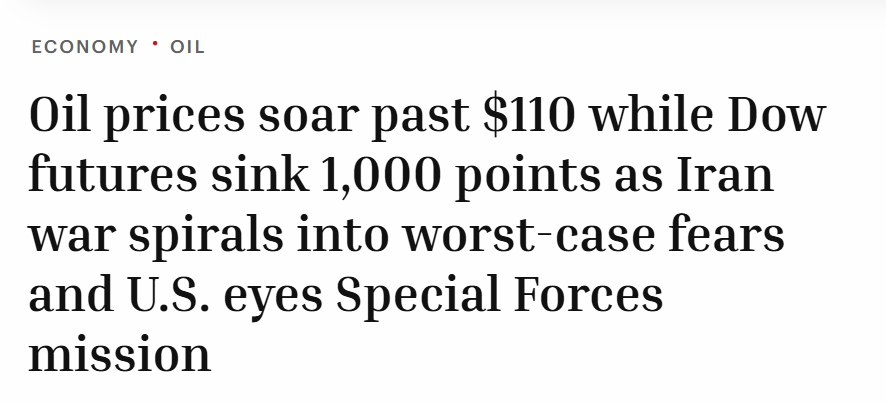
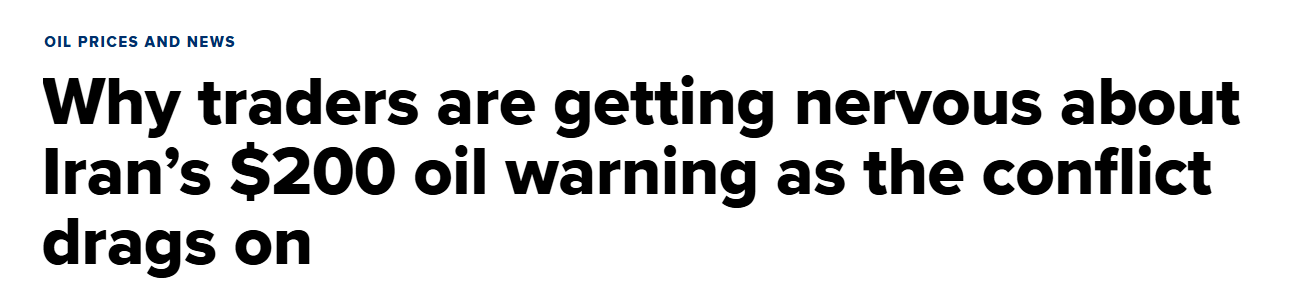
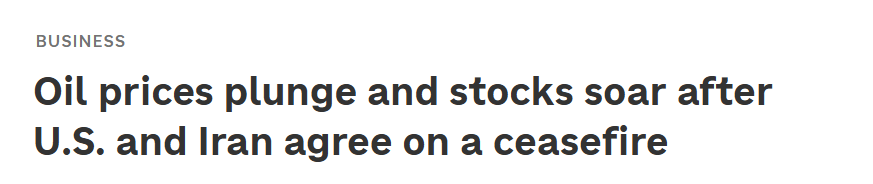
What I’d put to you is that almost everyone has found themselves in a deeply committed relationship with the price - the one figure that’s impossible to miss - while there are some equally important figures deserving of attention.
Let me take you through what I am watching and how I see the pieces fit together, because the conclusion I have landed on is profoundly unexciting.
“I think the boring thing happens” is not the stuff of viral threads, I’m well aware of that, and I have long since made my peace with it.
Painful Pumps & Panic Producers
The war is real, the disruption is real, and I am not here to wave any of it away. Crude has climbed something in the region of one hundred percent measured from where it started the year, which is a serious move by any standard and quite enough to ruin the quarter for anyone who was leaning the wrong way.
Context is key here, and the history is where the panic starts to lose its footing.
When the Arab producers turned off the taps in 1973, oil didn’t merely double, it ran up by something closer to three hundred percent and then sat there stubbornly elevated, for the better part of a decade.
When Iraq rolled into Kuwait in 1990, the price comfortably more than doubled inside a few weeks.
Those were the genuine article, supply shocks that rearranged the global economy and left scorch marks on an entire generation of investors.
What we have now is sharp, painful at the pump, but also, by the brutal standards of a real oil crisis, fairly contained.
A doubling off a low base is not nothing, but nor is it the apocalypse the more excitable corners of the internet are busy pricing in.
The gap between “this hurts” and “this is 1973” is the gap between an awkward year and a structural catastrophe, and the market is currently making a hash of telling the two apart.
That disconnect is where it gets interesting, because when the price action is screaming “crisis” while the size of the move is muttering “managed disruption”, it usually tells you that the people doing the screaming are working off the headline and the people doing the muttering are working off the data.
Countdown to Disaster…Or Maybe Not?
The number I actually care about is about as glamorous as a gas meter.
Every serious oil-consuming nation keeps an emergency stash, or to put it more professionally, a strategic reserve, for exactly the sort of moment we’re living through.
In the US it is called the Strategic Petroleum Reserve, or SPR for short, and it exists so that when the world’s supply suddenly gets difficult, the government can ease open the tap on its own stockpile and take the edge off the price before anyone has to start queuing at the gas station.
And that’s what has been happening. Around late March the reserve started visibly draining, and it’s been draining since.
On the face of it that sounds like exactly the sort of thing you would do in a panic, and the doom crowd has duly seized on it, running the simple arithmetic.
If you assume the reserve keeps emptying at the pace it has been, a straight-line projection leaves you with somewhere around nine months of it before the tank runs dry.
Nine months... cue the columns about America running on fumes.
Except the straight line is the wrong way to read it. The current drawdown is not a sale... It’s structured as an exchange, which is a polite way of saying it’s a loan dressed up in a barrel.
The oil that is leaving now is contractually due to come back, with the first returns scheduled from around November this year.
So the “nine months to empty” figure isn’t a countdown to disaster, it’s a snapshot of a deliberately temporary measure, designed from the outset to be refilled.
It’s a simple but important distinction, and it changes the way you read the move quite significantly.
A government genuinely terrified of a permanent supply crisis doesn’t tend to lend its emergency oil out on a return ticket.
The fact that the reserve is being run down on an exchange basis, with the refill already written into the paperwork, tells you the people in charge are treating this as a bridge to cross, not a cliff to fall off.
They’re buying time, and they are doing it in a way that assumes there will be a calmer world on the other side in which to top the tank back up.
When the behavior of the big actors (the government) and that of the spectators (you, me, and average Joe) point in opposite directions, the big actors are usually the ones worth watching.
People panic with their mouths, but they reveal what they actually expect with their actions.
Tick-Tock Election Clock
Now layer the timing on top, and this is where it stops looking like coincidence and starts looking like choreography...
And boy has the market been dancing.
In the same window that the reserve began draining, the man at the top started behaving like someone who very much wants this over.
On March 23rd he announced a pause on striking Iranian energy infrastructure, citing what he described as productive conversations.
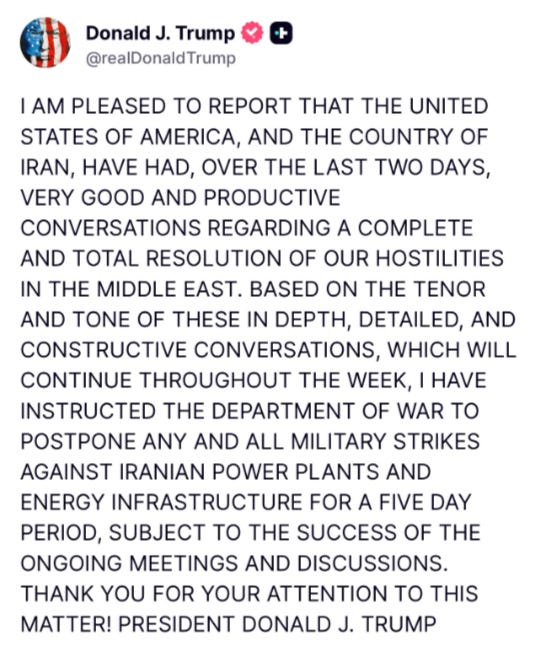
A few days later, on the 26th, he extended that pause and declared that talks were going, in his words, very well.
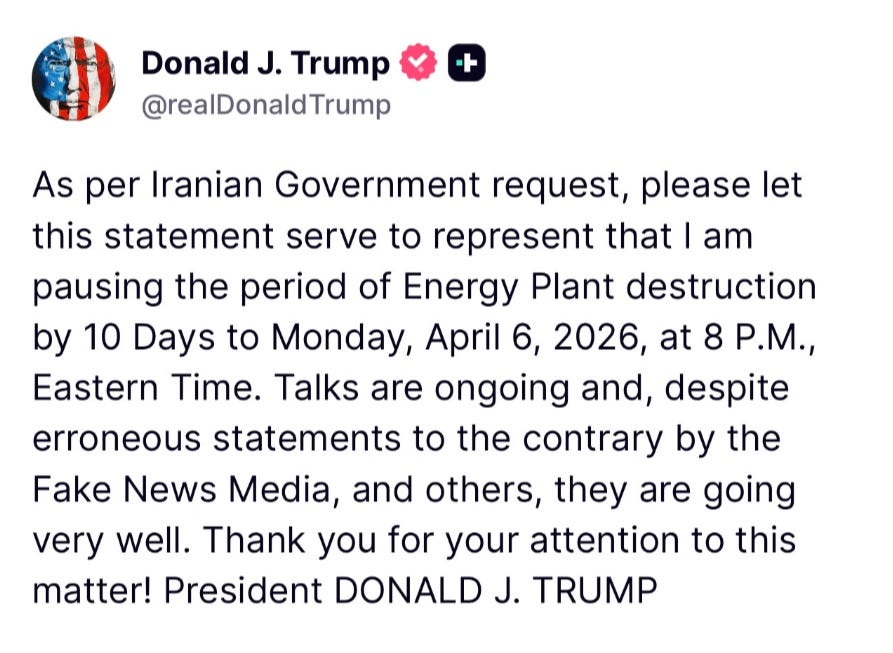
The fact that Tehran promptly denied any such friendly talks and dismissed the American proposal as one-sided only sharpens the point rather than softening it.
One side is publicly insisting the negotiation is going splendidly while the other insists it’s barely happening.
Both of those postures can serve the same purpose, which is to keep the temperature down while the real work goes on behind the scenes.
You don’t pause your own bombing campaign twice, and start talking up the diplomacy, while simultaneously draining your strategic reserve to hold the price down, unless your overriding priority is to stop this thing escalating.
Every one of those moves points in the same direction, and none point to an administration settling in for a long war.
And then there’s the calendar that really matters… the political one.
There are midterm elections this year and there’s no surer way to lose them than to preside over a real energy crisis, with gas prices on the news every evening and households watching their weekly fuel bill climb.
A long, hot oil war running straight into an election is roughly the political equivalent of scheduling root canal surgery for the morning of your wedding.

The incentive to get this resolved, and to be seen getting it resolved, is enormous and it is getting more enormous by the week.
You can see the same instinct bleeding into the wider region, too.
There has been visible pressure applied to get Israel to ease off in Lebanon, which isn’t the move of someone trying to widen the conflict.
It’s the move of someone trying to drain the pressure out of the whole system so the oil can start flowing again at the earliest possible moment.
Put the reserve, the pauses, the talk of talks, the election clock, and the regional throttling-back side by side, and a picture forms that the price action simply isn’t reflecting.
Almost everyone with the power to make this worse is instead behaving like someone desperate to make it better.
I’ll Never Go Viral… But I’ll Never Go Broke
There’s one serious cost to all this, and it isn’t the one filling everyone’s feed; the price of a barrel is the smallest part of it.
What I’m thinking of creeps up slowly, doesn’t show up on a chart, and gets a great deal more expensive the longer it runs.
Any guesses?
The petrodollar.
For decades the world has bought and sold its oil in dollars.
That arrangement, often shorthanded as the petrodollar, is one of the load-bearing pillars under American financial dominance, because if everyone needs dollars to buy energy, then everyone needs dollars, full stop.
It’s the house taking its cut on every hand of cards dealt anywhere on the planet.
What a conflict like this does the longer it runs, is hand other players a reason to stop using the house’s chips.
A growing share of oil trade is settling outside the dollar, and a conflict that puts a major producer under pressure only speeds up the hunt for alternatives.
Iran’s willingness to take payment in other currencies isn’t a desperate improvisation but a sophisticated play, an attempt to show everyone watching that the dollar isn’t compulsory.
This is the part the US can’t afford to let run.
A spike in the oil price is a bad quarter; the slow erosion of the dollar’s grip on global energy is a bad century.
If you want to know why I’m so confident this gets resolved rather than left to fester, it isn’t sentiment and it isn’t optimism, and it’s definitely not because I’m some oil aficionado.
It’s simply because the real cost of letting it drag on isn’t measured in barrels, but in the one thing the United States can’t afford to lose its grip on, which is its monopoly on the world’s money.
Which brings me to the question everyone is actually asking, even if they’re asking it badly.
Does this drag on or does it resolve, and what on earth is a sensible person supposed to do with the oil price while we wait to find out?
I have a fairly firm view on both, and it’s not the view the world of viral tweets would want me to have.
The exciting answer is to back the truck up on oil and brace for escalation.
The answer I have actually arrived at is considerably more boring.
I’ll now lay out where I think this lands, why China of all places holds more of the cards than Washington would care to admit, and what I am personally doing about it, which is… almost nothing.
Almost.
What Do Airplanes and Oil Prices Have in Common?
Everything above is free. Where this goes from here, what it means for the oil price over the next few months, the reason China is the most important player at the table, and my personal plan of action is laid out below for paid subscribers.
